1. Integration of 3D LiDAR Scans into Digital Platforms
1.1 3D LiDAR Scanning: Digital Transformation of Spaces
In a world increasingly reliant on digital representations, 3D LiDAR scanning has brought about a significant transformation in how we digitize and interact with physical spaces. This advanced technology enables highly precise and detailed capture of the real world, ushering in a new era across various industries. In this guide, we explore the revolutionary world of LiDAR scanning.
1.2 Fundamental Principles of 3D LiDAR Scanning
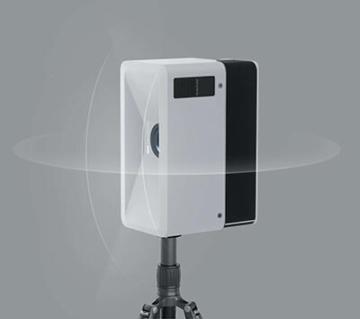
The technology behind 3D LiDAR scanning is as fascinating as its applications. LiDAR (Light Detection and Ranging) sensors emit light and measure the reflected light to create an accurate three-dimensional representation of the environment. These highly detailed scans enable the conversion of physical spaces into digital models, creating a realistic and interactive digital experience.
1.3 Applications of 3D LiDAR Scans in Various Industries
3D LiDAR scans are used across a wide range of industries, including real estate, cultural institutions, hospitality, and interior design and exhibition design. For example, real estate developers use this technology to create realistic models of their properties, which is particularly valuable during times of travel restrictions. Cultural institutions, in turn, use 3D scans to offer virtual tours of exhibitions and historic sites.
Model of an Exhibition Stand
2. Realsee: Pioneer in LiDAR Technology
2.1 Innovation and Creativity in 3D Capture
Realsee is at the forefront of innovation in the field of 3D LiDAR scanning. By combining technological expertise with creative vision, the company enables the transformation of real spaces into impressive digital worlds. Their advanced 3D scans capture every detail and texture, creating a realistic digital representation.
2.2 Expertise in Digital Spatial Design
Creating high-quality 3D scans requires a deep understanding of spatial design and digital modeling. Realsee uses its expertise not only to capture the physical aspects of a space but also to transfer its atmosphere and aesthetics into the digital world.
2.3 Interactive Digital Worlds through Realsee
Realsee enables users to have complete control over their digital environment. Unlike static images, 3D scans provide an interactive experience where users can view and explore the scene from different angles. This is used in industries such as real estate, museums, and retail to offer customers and visitors unique virtual experiences.
3. Technical Details of 3D LiDAR Scanning
3.1 Synergy of Technology and Precision
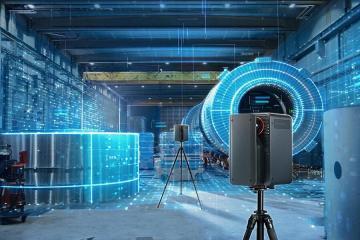
Laser radar technology further enhances product precision. Tests have shown that the measurement error for the interior area of a 100-square-meter house is within 0.4%.
Realsee’s Galois also supports fisheye lens capture, which can produce a seamless and colorful panoramic image with 134 million pixels, equivalent to 16K image quality.
3D LiDAR scans are the result of combining advanced sensor technology with precise data capture. Specialized LiDAR sensors capture millions of points and use them to create a three-dimensional map of the environment. This highly precise data enables the creation of a detailed and realistic digital model.
3.2 Challenges in Data Capture and Processing
One of the greatest challenges in 3D LiDAR scanning lies in processing and integrating the collected data. Realsee uses advanced algorithms to create unified, seamless digital models from the captured point clouds. Processing this data requires specialized software and hardware to ensure high accuracy and quality.
3.3 Applications in Various Industries
3D LiDAR scanning has diverse applications, from architecture and urban planning to security surveillance and event management. In each of these industries, the technology enables a precise and detailed representation of reality, leading to more efficient workflows and an improved user experience.
4. Application Areas of 3D LiDAR Scans
3D LiDAR scanning is used across various industries. In the real estate sector, it enables precise and detailed visualization of buildings, both interior and exterior, which is particularly valuable for potential buyers and investors. Hotels and resorts use this technology to impressively showcase their facilities, while museums and galleries use it to make their collections accessible to a global audience. In retail, 3D LiDAR scanning also offers customers the opportunity to navigate through digital replicas of stores.
4.1 Education and Training with 3D LiDAR Technology
In the education sector, 3D LiDAR scanning opens new horizons. Schools and universities use it to create realistic and interactive learning environments. This enables students to explore complex topics through virtual models and replicas. In professional training, such as in medicine or engineering, the technology provides a realistic and safe environment for practical training.
4.2 New Dimensions in the Event Industry
In the event industry, 3D LiDAR scanning offers a new dimension for concerts, festivals, and conferences. By creating digital replicas of venues, these events can be made accessible to a wider audience, significantly expanding reach and participation.
4.3 Marketing and Advertising: Innovation through 3D LiDAR
In marketing and advertising, 3D LiDAR scanning is a powerful tool for presenting products and services. Companies can use it to provide a more immersive understanding and experience of their products, which is particularly beneficial in industries such as automotive, where customers can explore vehicles in a realistic virtual environment.
4.4 Public Safety through Precise 3D Scans
3D LiDAR scanning is also increasingly used in public safety. The technology provides accurate and comprehensive views of public spaces and events, improving surveillance and planning of security measures.
4.5 3D LiDAR in Architecture and Urban Planning
In architecture and urban planning, 3D LiDAR scanning enables architects and urban planners to present their designs and models in detail and realistically. This leads to more efficient planning and presentations that benefit both planners and clients.
5. Integration of 3D LiDAR Scans into Digital Platforms
3D LiDAR scans can be seamlessly integrated into various digital platforms to enhance user experience and strengthen the online presence of businesses.
5.1 Enhancement of VR and AR through 3D LiDAR Scans
The integration of 3D LiDAR scans into VR and AR applications offers an even more immersive experience. Users can move through a virtual world created through precise and detailed scans of real locations. This is particularly beneficial for businesses that want to invite their customers into a virtual environment of their premises or products.
5.2 Website Integration for Interactive Experiences
By integrating 3D LiDAR scans on company websites, visitors can enjoy an interactive and realistic experience. This not only increases engagement on the website but also strengthens the brand and its online presence.
5.3 3D LiDAR Scans in Social Media
Using 3D LiDAR scans in social media enables businesses to expand their reach and strengthen interaction with their target audience. Interactive 3D models and virtual tours can increase user engagement and help content be shared more frequently.
5.4 SEO Benefits through 3D LiDAR Scans
3D LiDAR scans contribute to improving local search engine optimization. By integrating them into digital platforms and providing interactive content, businesses can increase their visibility in search results.
5.5 Business Benefits through Innovative 3D Technology
Using 3D LiDAR scans offers numerous benefits for businesses. They not only improve online presence and customer engagement but also enable products and services to be presented in innovative ways.
6. Business Benefits through 3D LiDAR Scanning
3D LiDAR scanning is a powerful tool for businesses of all types. It not only provides improved online visibility but also enables detailed and realistic representation of products and spaces.
6.1 Precise Visualizations through 3D Scans
3D LiDAR scans provide precise and comprehensive representation of spaces and products. This is particularly beneficial in industries such as real estate, hospitality, and retail, where realistic visualization is crucial.
6.2 New Marketing Approaches with 3D LiDAR
The technology enables creative and innovative marketing approaches. Businesses can use 3D LiDAR scans to tell unique stories around their brand, increasing brand awareness and customer engagement.
6.3 Versatile Media Applications
3D LiDAR scans are versatile and can be used on websites, in social media, mobile apps, and virtual events to reach a broad audience.
6.4 Analysis of User Behavior with 3D Technology
By analyzing how users interact with 3D scans, businesses can gain valuable insights into the behavior and preferences of their target audience, which is essential for optimizing marketing strategies and customer experiences.
6.5 Versatile Marketing Tool
Overall, 3D LiDAR scanning is a versatile tool that helps businesses strengthen their presence, present their offerings attractively, and effectively achieve their business goals.
7. Future Prospects of LiDAR Scanning
The future of 3D LiDAR scanning looks extremely promising and dynamic, as it continues to evolve with technological advances and diverse application areas. The integration of Augmented Reality (AR) and Virtual Reality (VR) into 3D LiDAR scans enables new, more immersive and interactive experiences that blur the boundaries between the real and virtual worlds. These developments have the potential to revolutionize how businesses and brands interact and create new opportunities in areas such as education, tourism, and the entertainment industry.
7.1 Education: Enhanced Learning Environments with 3D Scans
In education, 3D LiDAR scans can be used to create enhanced learning environments. Students could gain access to places and scenarios that would otherwise be physically inaccessible through virtual field trips and immersive learning experiences. In fields such as archaeology, for example, students could explore ancient sites in three dimensions to develop a deeper understanding of historical contexts.
7.2 Tourism: New Horizons through Virtual Travel
In the tourism sector, 3D LiDAR scans enable potential travelers to virtually explore destinations before booking their trip. This could lead to a new era of “virtual tourism,” where users can experience distant places conveniently from home. This not only offers benefits for people with limited mobility but is also a more sustainable alternative to physical travel.
7.3 Revolution in Entertainment through 3D Technology
In the entertainment industry, 3D LiDAR scans could help make films and games even more realistic and interactive. Viewers and players could immerse themselves more deeply in stories and game worlds by exploring environments in 3D. For game developers, this opens up possibilities for innovative game concepts that fully integrate the player into the virtual world.
7.4 Innovations in the Real Estate Market with 3D Scans
LiDAR scanning could also have a revolutionary impact on the real estate market. Prospective buyers could view properties virtually, saving time and costs and enabling properties to be viewed across great distances. This can be particularly beneficial in the planning and presentation of construction projects.
7.5 AI Application for Optimizing 3D Scans
Advances in AI and machine learning could play an important role in the further development of LiDAR scanning. Through improved data processing and analysis, the quality and accuracy of 3D models could be significantly increased, leading to more detailed and realistic visualizations.
7.6 Overall Outlook: Exciting Developments in 3D Scanning
In summary, the future of LiDAR scanning is incredibly exciting and promising. With continuous advances in technology and diverse application possibilities across various industries, we are entering an era where digital representations of the real world are becoming increasingly important.
8. The Significance of LiDAR Scanning in the Digital Era
In conclusion, 3D LiDAR scanning is more than just a technological development; it is a key instrument in digital transformation. Through partnership with Realsee, businesses across all industries can benefit from this groundbreaking technology and offer their customers exceptional digital experiences. In a world where digital content dominates, LiDAR scanning is an essential component of any forward-thinking marketing strategy. It not only provides a window into new worlds but also a bridge connecting the physical and digital worlds.
8.1 Immersive Experiences and Presentations through 3D Technology
This technology enables the creation of an immersive experience that places the user in a fully digital environment. This is particularly valuable in areas where detailed and realistic representations of structures and environments are required.
8.2 New Perspectives in Planning and Development
Furthermore, LiDAR scans open new perspectives in planning and development. For example, complex urban and natural landscapes can be captured and analyzed in detail, leading to more efficient and environmentally friendly planning processes.
8.3 Enhancement of Online Presence and Brand Strengthening
Another aspect is the improvement of businesses’ online presence. With impressive 3D visualizations, businesses can stand out from the competition and present unique content that generates attention in social media and digital campaigns.
8.4 The Role of 3D LiDAR Scanning in the Digital World
In summary, 3D LiDAR scanning is not just a trend but an essential component of the digital landscape that is continuously being developed. It enables the transcendence of conventional data capture boundaries and offers diverse application possibilities across various sectors. With its help, businesses can strengthen their digital presence, develop innovative strategies, and reach their target audiences in completely new and fascinating ways.
Examples
Furniture Store
Climbing Gym with Integrated Videos